Project update 10: It’s a wrap! For now…

monsoon1
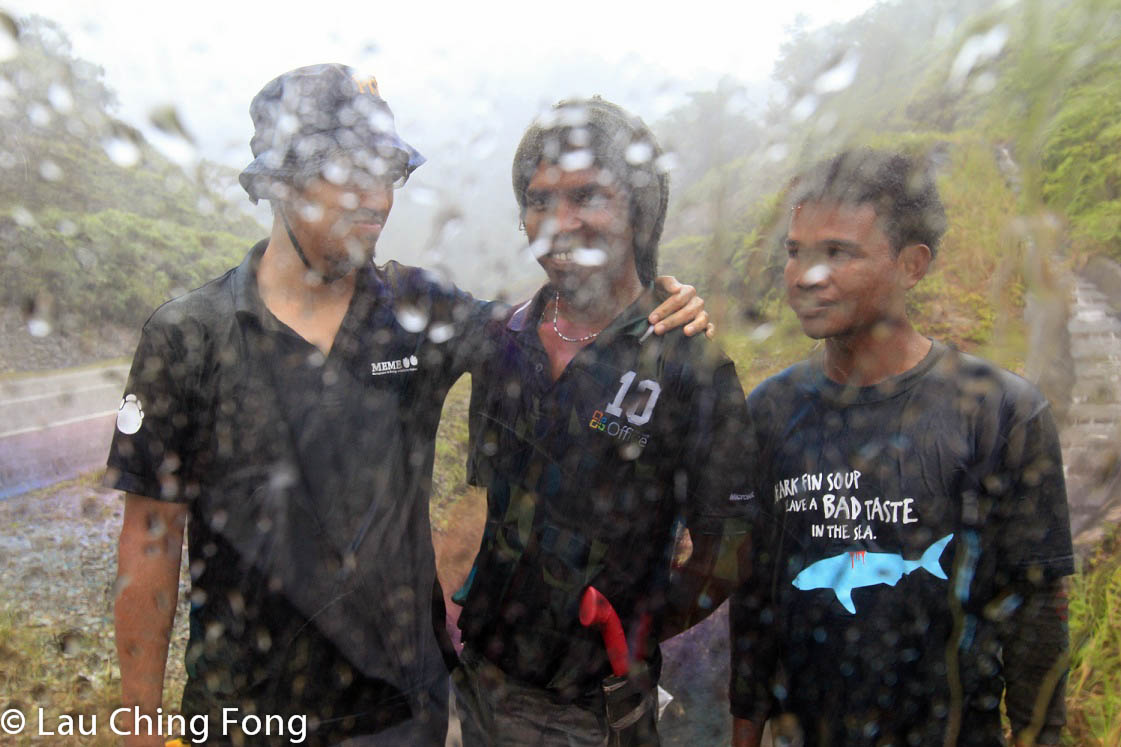
Drenched but happy that the fieldwork is finally over…for now

For those of you who are wondering what’s been going on in the Kenyir Wildlife Corridor (Primary Linkage 7), the end of the Chinese New Year period has also brought the end of Reuben‘s PhD field sampling. The tail end of the monsoon season caught Reuben and his team as they finally wrapped up their fieldwork, retrieving every last camera they set up along the Kuala Berang Highway. All the cameras set up in the Bintang Hijau Wildlife Corridor (Primary Linkage 8) have also been retrieved, but at a considerable cost – 15 camera traps were stolen over the course of 8 months! Only 2 were ever stolen from Kenyir within a similar sampling duration. Don’t worry, none of the stolen cameras were those adopted by individual donors. Continue reading
Media coverage: In the kingdom of the black panther

Rimba’s mascot takes centrestage in this special coverage by Mongabay! Reuben and our budding ‘carnivore researcher’ Laurie talk to Jeremy Hance about black leopards in Peninsular Malaysia, putting the spotlight on this mysterious and under-studied species. Click on the image below to read all about it!

mongabay panther

Project update 9 + video update 3: Some hairy business

MBZ logo

This camera-shy leopard is part of our latest project update courtesy of Laurie, our current volunteer who’ll be with us till February next year. Besides helping to hold the fort for Reuben’s project up in Gerik, Laurie’s  main mission is to test out the efficacy of hair traps in the Malaysian rainforest – something he’s started trialing since he joined us in September. This pilot project is part of our ongoing mammal surveys in Perak and Terengganu and was made possible through generous funding from the Mohamed bin Zayed Species Conservation Fund.

Laurie and Reuben have been conducting these trials for a new way to shed light on the status of one of the more rare and elusive species of carnivore. So far, Dholes or Asiatic Wild Dogs (Cuon alpinus) have been detected several times at both of these locations. Yet very little is known about this endangered animal, and in an environment notorious for its difficulty to detect species at low density, the challenges in monitoring them are substantial. If hair samples could be collected from these, or other carnivores, they will put together a larger proposal to study their population/density/range size, group association, genetic relationships.

But how to get these samples? Continue reading