Toolbox update 7: How to use Peninsular Malaysia’s first online map of limestone hills

For many years, scientists in Project Limestone have been frustrated by the lack of GIS information on limestone hills in Malaysia.  Till now, information on localities, shapes and sizes could only be obtained from books and journals, but not anymore…

Thanks to Liew and the team, Rimba has created Peninsular Malaysia’s first online map containing 445 hills.  This GIS map can easily be accessed by anyone who has Google Earth. This map is not a final product, but can be constantly improved by anyone who wants to add spatial or biological information on limestone hills. All the methods and data are available for anyone to reuse, revise, remix and redistribute.

With this map, we were finally able to conduct a simple conservation prioritisation exercise for limestone hills based on their size and the degree to which they are isolated and disturbed.

You can find our paper published here in the journal Tropical Conservation Science. Meanwhile, here are videos that explain the methodology, and how to update and use this map!
 

Project update 20: Harimau Selamanya year 2 in review

The end of 2015 marks the completion of the second year for Project Harimau Selamanya. The year 2015 has been more productive and eventful than we could have ever imagined when we started off! In the space of a year, we have continued deepening collaboration with state and federal government partners. Our field team has also strengthened their fieldwork and wildlife detection skills through professional training and field practice. Best of all, our camera trap efforts have paid off with important data to help with the conservation of Kenyir’s forests! All these were made possible with Perhilitan and the state government’s commitment to project collaboration, as well as the generous funding from Panthera and Woodland Park Zoo.

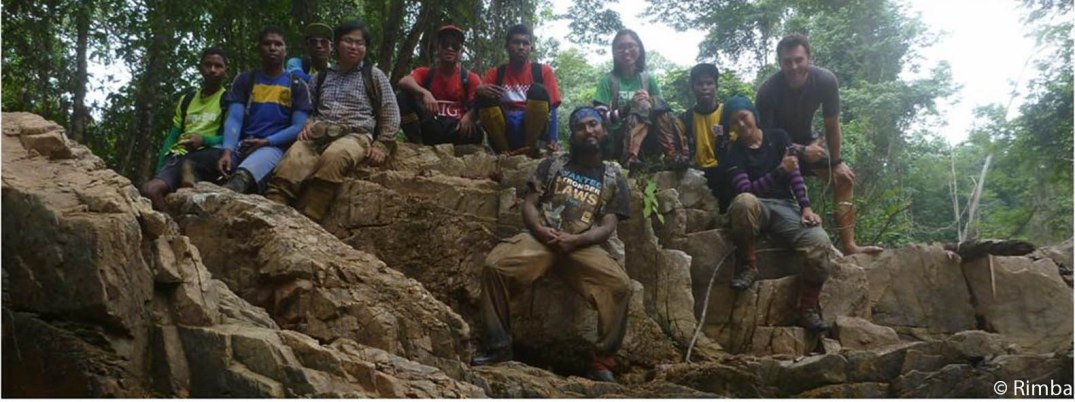
2015 saw a vibrant field team in Harimau Selamanya headed by Reuben, Wai Yee, Sri and Junn Kitt and staffed by our fantastic field assistants Puyee, Baki, Donos, Maslan, Landur and Rahmat. We were also joined by enthusiastic and conservation-driven research assistants Akmal, Zatul and Shu Woan.

pic1
The 2015 Harimau Selamanya team

The 2015 team oversaw three simultaneously-running major projects: Continue reading

Project update 19, photo update 11, video update 6: Project Pteropus phase 1 in review

sheema_esteban_tekek

It’s definitely been a crazy, roller coaster ride for Project Pteropus so far! Time flies when you’re having fun, and before we knew it, we’re already in the third and final year of Sheema‘s PhD. We’re due to start a tiny bit more of fieldwork over the next 3 months, then everything needs to be wrapped up pronto as she’ll be on her way to spend 6 months in Paris this June 🙂

So what has the project achieved so far? Some pretty exciting stuff, as it turns out. Almost all the data are in already, but some still need a bit of time to be analysed. We’ve decided to summarise our results so far into an interim report, which is why you’re getting this bumper post that serves as a compilation of updates, photos AND videos all at the same time! 😀

Also, HUGE thanks to Bat Conservation International for awarding us a small grant in September last year. Without this funding we definitely wouldn’t have been able to achieve as much as we have, and we’re deeply grateful. Click on the BCI logo below to find out more about applying for their small grants:

BCI logo

Meanwhile, here’s what we’ve found out up to this point (if you’re just interested in the images and don’t need to read through the information, just scroll down further!): Continue reading