Toolbox update 6: Methods for studying pollen

Team Pteropus would like to share a few helpful tips and protocols on how to collect and study pollen. This isn’t just useful for budding botanists, plant ecologists or beekepers! It’s also relevant for wildlife ecologists who want to study the diet of animals that feed on flowers. It’s a good way to identify plant species in animal diet, as different types of plants have different, distinctive pollen shapes and sizes. In order to do this, you’ll need to start by collecting pollen samples directly from the flowers themselves, to build up your very own pollen reference library.

The pollen grains of the passion flower (Passiflora sp.) have a very distinctive 'tennis ball' shape
The pollen grains of the passion flower (Passiflora sp.) have a very distinctive ‘tennis ball’ shape

This latest Biologist’s Toolbox post comes to you all the way from San Jose courtesy of Esteban, who shares with us the pollen extraction protocol he was trained to use by his university. Although it’s also possible (and preferable) to use a Scanning Electron Microscope (SEM) for pollen studies, this can be complicated and expensive. This protocol provides you with a simple and easy-to-adapt method to be used with a normal light microscope, and which you can easily execute yourself.

According to Esteban: Continue reading
Project update 15: Mango carnage season!

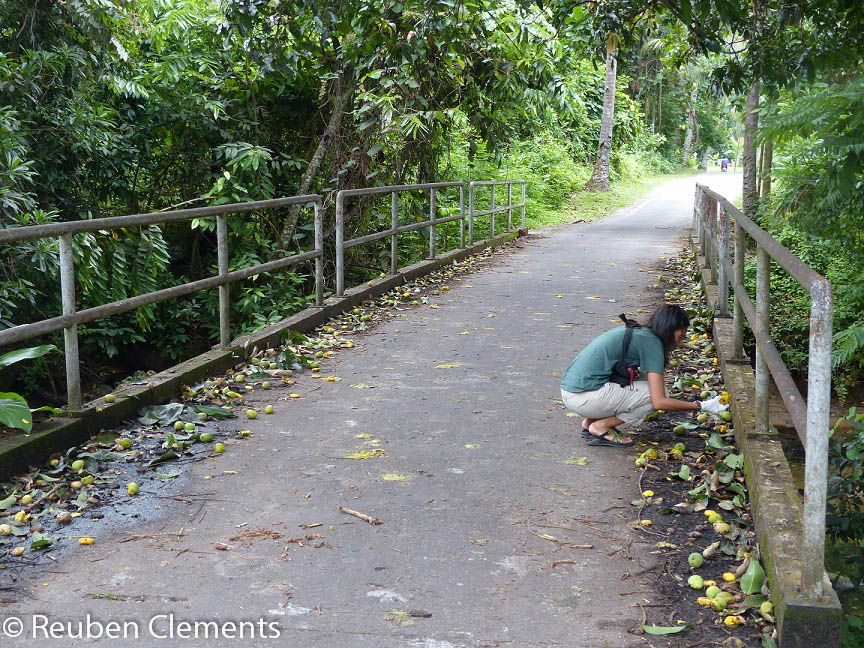
Sheema examines the dozens and dozens of dropped mango fruits to guess the causes of damage

It’s mango carnage season in Tioman!!!

Why do we say that? Well, if you take a look at the photo above, you’ll get an idea of just how many juicy fragrant mangoes have been left to litter and rot on the ground. And that’s not even counting the ones that fell into the river below! Many have been half-eaten or bitten, while others have simply been smashed and destroyed. These have all dropped from one single gigantic tree, and the Project Pteropus team now have a very good idea of who’s responsible for all the carnage, having caught the culprits in the act… Continue reading

Project update 14: Final report from Project Black Cloud

laurie_leopard The final trek is over, all of our cameras are in and the fieldwork for Project Black Cloud has, at last, come to a close. And it was just in time too! During December 2013, the floods that swept the east coast of the peninsula arrived in Kenyir, submerging the area under our house. In the forest, what had previously been innocent-looking streams rapidly turned into swollen rivers. The team managed to safely negotiate these, but sometimes needed the help of rattan ropes strung across the river. This one-year project in its current form comes to an official end as Laurie puts the finishing touches to his Master’s thesis – but fear not, we’re not done with Kenyir just yet. Continue reading