Project update 18: Project Pteropus: Year 1 in review

It’s been an intense roller coaster adventure for Project Pteropus so far! Sadly, we still haven’t been successful in getting much funding, as none of our grant applications last year were accepted. Donors either feel that flying foxes aren’t a priority, Peninsular Malaysia isn’t a priority, or both 😦

Still, this hasn’t stopped us from accomplishing many things last year. Thanks to kind monthly donations from Marinescape of New Zealand – our sole donor – we were still able to carry out some fieldwork.

Reuben and Esteban hard at work collecting flying fox faeces under the burning sun

Much of last year was spent on recces, observations, and testing things out at Kampung Juara. We collected lots of bat droppings, fruits, flowers and seeds. We hiked several jungle trails and observed different trees and what they drop onto the forest floor. We talked to local people in the village, and asked them about their experiences, knowledge and opinions. We counted lots and lots of bats. And we did it all every single month, until the monsoon arrived around November, forcing us to take a break for a few months.
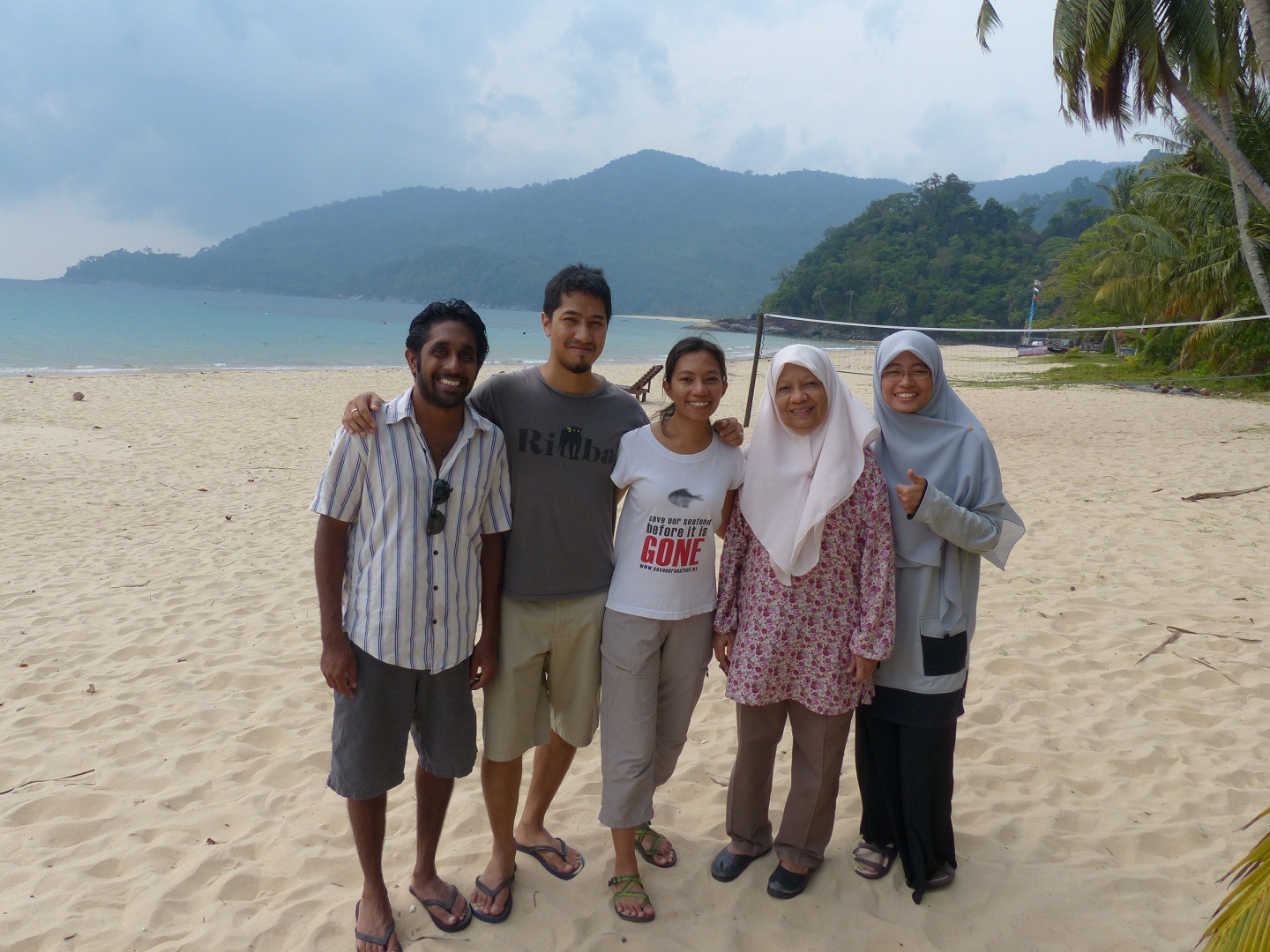
Project Pteropus wouldn't have been possible without help from amazing volunteers, friends and family :-)
Project Pteropus wouldn’t have been possible without help from amazing volunteers, friends and family 🙂

Most of the time, it was just Reuben and Sheema doing much of the work. But we were joined by many, many helpful volunteers who lent a hand, and this project would not have been possible if they hadn’t been willing to come along on our field trips and donate their time and energy! Esteban Brenes-Mora, our Costa Rican volunteer for 6 months, was an especially invaluable asset and is now sorely missed. And we would never have survived without help from Harimau Selamanya members Jasdev, Laurie and Wai Yee, plus our resident botanist Lahiru also made it over to help us identify plants. Huge thanks also to Lim Wee Siong, Anna Deasey, Khatijah Haji Hussin, Kim McConkey, Noraisah Majri, Mahfuzatul Izyan, and Joanne Tong. We’re also super grateful for all the help and support we’ve received from the lovely folk over at the Juara Turtle Project – Charlie, Izzati and Rahim are awesome people doing awesome work, so please check them out! They even donated the services of their volunteer Liz Moleski, who was kind enough to help out when Sheema got struck down by Hand, Foot & Mouth Disease (HFMD – the one that kids get, not cows!) and Reuben had to do a solo sampling trip. Last but not least, Project Pteropus benefited immensely from field visits and input from supportive supervisors Pierre-Michel Forget and Ahimsa Campos-Arceiz. All of these people helped to keep our project afloat and stop it from floundering 🙂

Here are some of the things we found out from last year’s work: Continue reading
Project update 15: Mango carnage season!

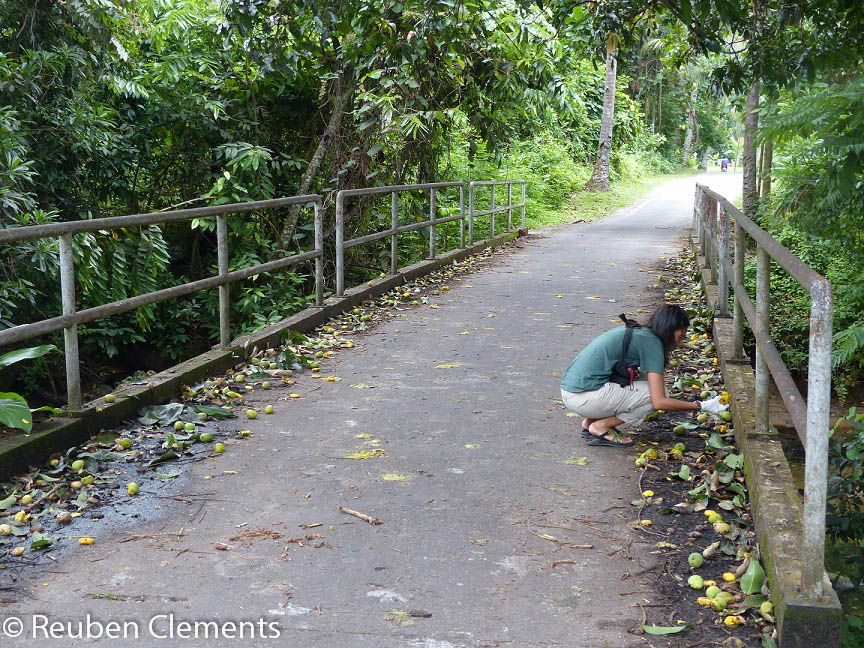
Sheema examines the dozens and dozens of dropped mango fruits to guess the causes of damage

It’s mango carnage season in Tioman!!!

Why do we say that? Well, if you take a look at the photo above, you’ll get an idea of just how many juicy fragrant mangoes have been left to litter and rot on the ground. And that’s not even counting the ones that fell into the river below! Many have been half-eaten or bitten, while others have simply been smashed and destroyed. These have all dropped from one single gigantic tree, and the Project Pteropus team now have a very good idea of who’s responsible for all the carnage, having caught the culprits in the act… Continue reading

Project update 13: Project Pteropus takes small baby steps out of the roost

It’s been another long while since we’ve been able to post any updates! We do apologise for those of you who were wondering what we’ve been up to for the past few months. Many of Rimba’s researchers took a bit of a hiatus over the Christmas and New Year period, and the start of 2014 has been taken up with a lot of planning and preparation. Things are slowly starting to pick up now, and we’ll be sharing more updates with you over the coming months.

To begin with, we’re very pleased to officially announce that one of our latest projects, Project Pteropus, is finally taking off this year. It’s had a very bumpy start trying to get off the ground (pun intended!), but we’ve been making slow progress. Unfortunately, funding is still an issue as we haven’t had much luck bringing in adequate money to carry out the work. But, we’re still persevering, for the sake of the bats! How could we say no to such amazing critters??

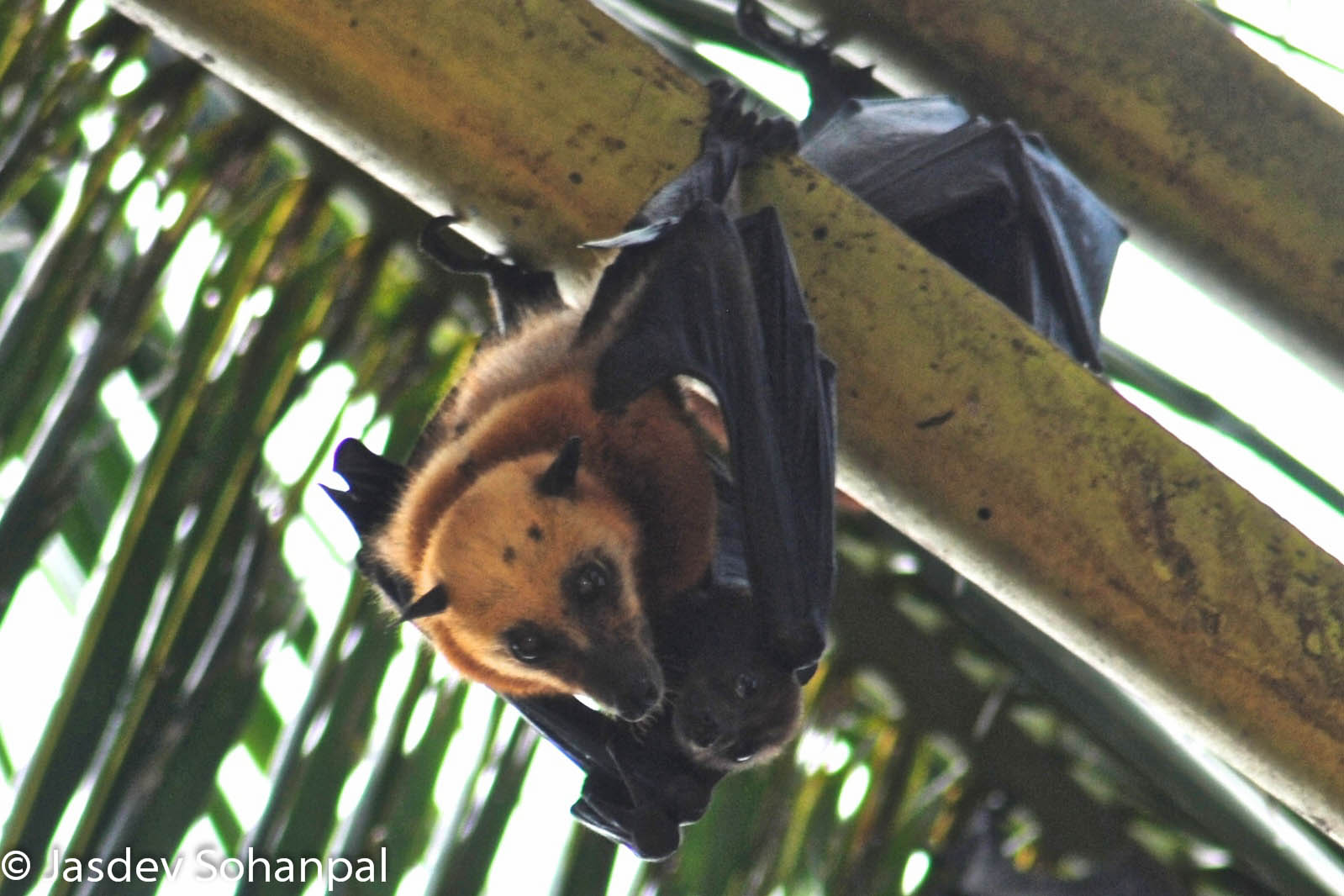
Mum and baby flying fox facing a precarious future on Tioman Island
Mum and baby flying fox (Pteropus hypomelanus) facing a precarious future on Tioman Island

Some of you may know that fruit bats, and flying foxes in particular, are Sheema‘s personal cause. These underdogs need our help because bat conservation and research isn’t something that most donors, agencies or NGOs are interested in supporting, despite the importance of bats in maintaining healthy, functioning forests. It’s been hard not to give up in the face of discouraging odds, but she’s now succeeded in making this project the focus of her PhD at MNHN.

After a few recce trips, Project Pteropus has now been established at the study site of Kampung Juara on Tioman Island, in the State of Pahang. This windswept beach facing the South China Sea is where the bats have chosen to make their home, roosting in tall coconut trees over the sand. This makes faecal collection a real breeze 😛 Continue reading