Publication update 13: Another new snail species from Terengganu!

It’s always a treat to find a species new to science.

But finding a new species of snail from Terengganu isn’t surprising.

One reason is that before the second half of the last century,  malacologists (scientists who study snails) mainly looked for snails in the Federated Malay States, which consisted of Negri Sembilan, Pahang, Perak and Selangor.

Finding a new species in Malaysia also isn’t that surprising. According to a study by Giam, one of Rimba’s researchers, tropical moist forests of the Neotropics, Afrotropics, and Indomalaya (this includes Malaysia!) are likely to harbour the greatest numbers of undescribed species.

Just last year, Reuben and his colleague, Tan Siong Kiat, described a new genus and species of snail in Terengganu. This snail is now known as Kenyirus sodhii. That was the first snail ever described from Terengganu and one of the first few animals to be named after Kenyir.

Now Reuben and another colleague, Mohammad Effendi bin Marzuki, are proud to announce another new species of snail from Terengganu: Pearsonia tembatensis.
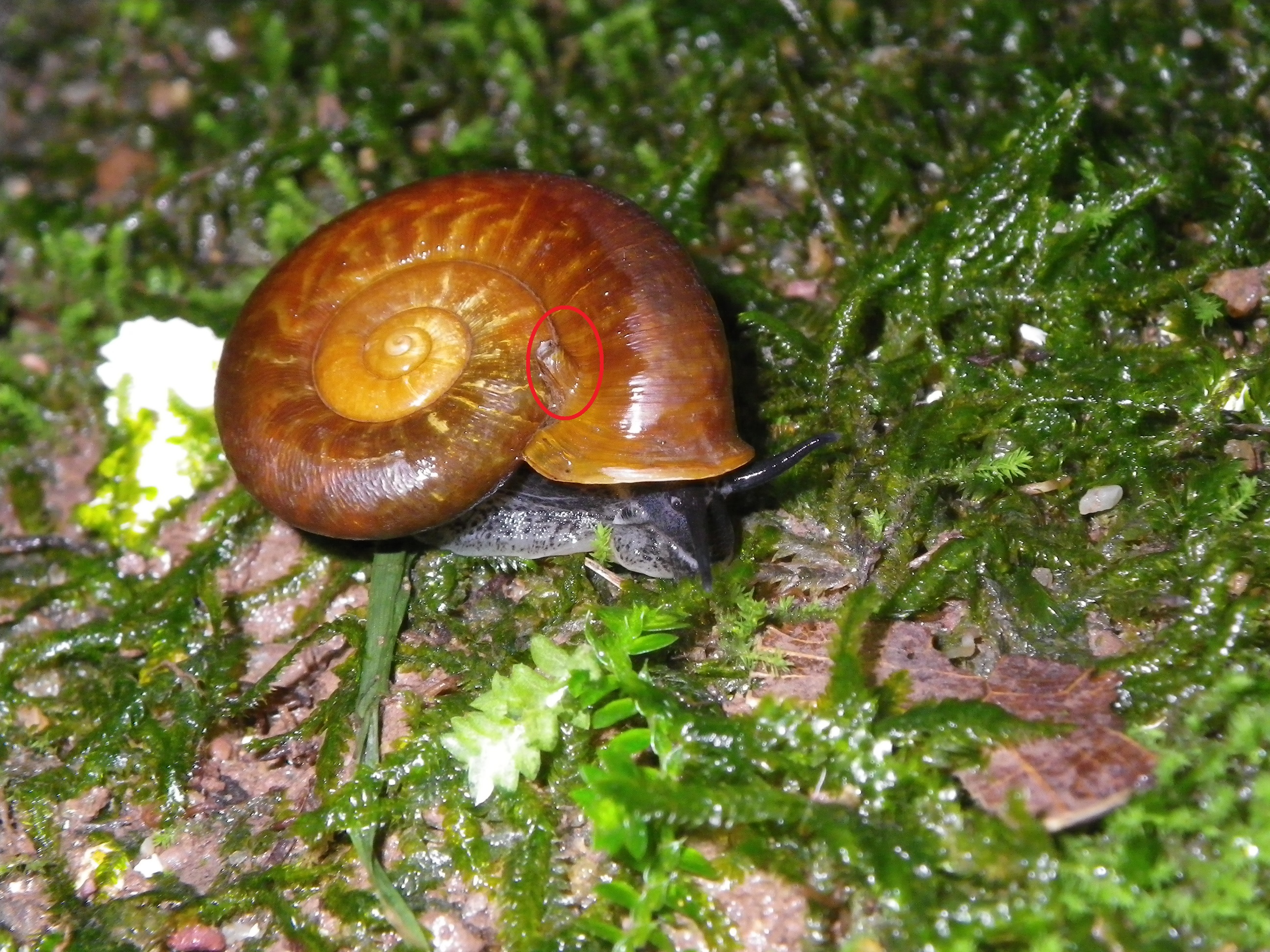
Pearsonia tembatensis, new species, from Tembat Forest Reserve, Terengganu. Red circle indicates snorkel.

Just for the record, this is the first time scientists have found this genus (Pearsonia) in Malaysia! You can read more information on this discovery here, which was published in the recent issue of the journal Raffles Bulletin of Zoology.

If you look closely at the shell of this snail, you will notice a snorkel-like protuberance (circled in red) on the shell. For now, nobody knows yet what the function of this ‘snorkel’ is for.

You might find the name tembatensis familiar, as this snail was named after Tembat Forest Reserve, where Reuben conducted his camera trapping work under the Kenyir Wildlife Corridor Project.

The snail was also named after Tembat to highlight the environmental destruction befalling this forest reserve due to the construction of  new hydroelectric dams. We hope that we’ll still be able to find this snail in drier parts of the forest once the dam begins operating, because in the flooded areas, even its snorkel won’t be able to keep this air breather alive for long…
Project update 10: It’s a wrap! For now…

monsoon1
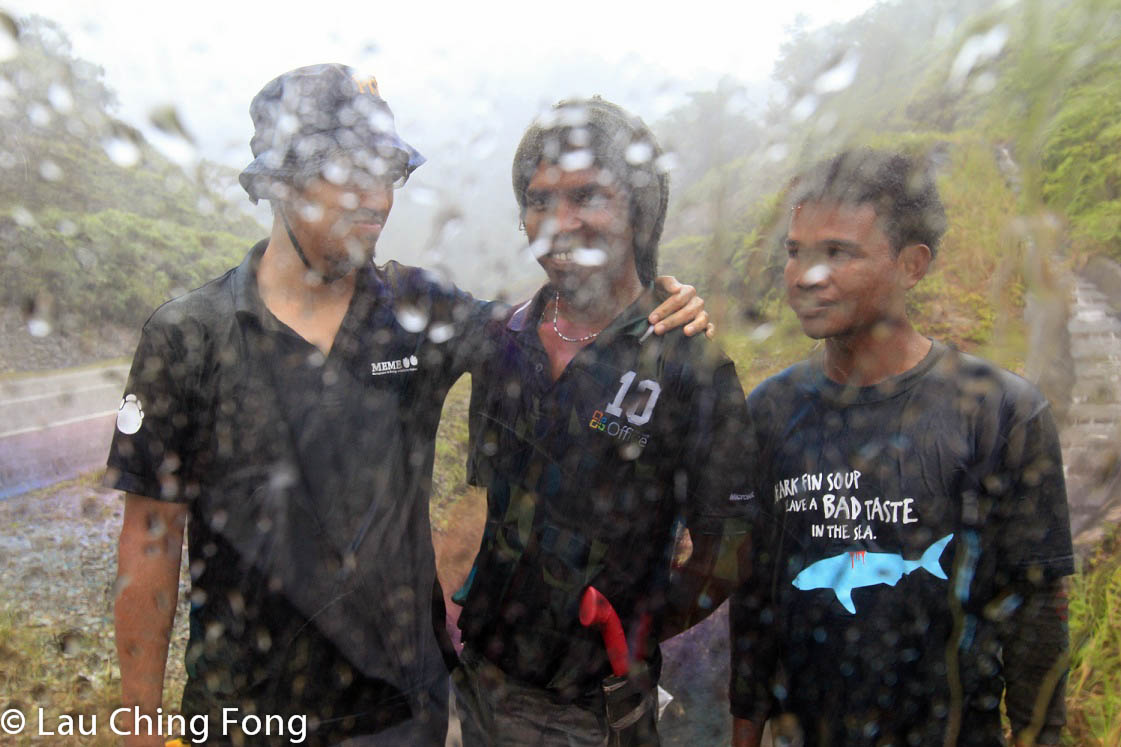
Drenched but happy that the fieldwork is finally over…for now

For those of you who are wondering what’s been going on in the Kenyir Wildlife Corridor (Primary Linkage 7), the end of the Chinese New Year period has also brought the end of Reuben‘s PhD field sampling. The tail end of the monsoon season caught Reuben and his team as they finally wrapped up their fieldwork, retrieving every last camera they set up along the Kuala Berang Highway. All the cameras set up in the Bintang Hijau Wildlife Corridor (Primary Linkage 8) have also been retrieved, but at a considerable cost – 15 camera traps were stolen over the course of 8 months! Only 2 were ever stolen from Kenyir within a similar sampling duration. Don’t worry, none of the stolen cameras were those adopted by individual donors. Continue reading

Special update: Good news from the Kenyir Wildlife Corridor

Hello all,

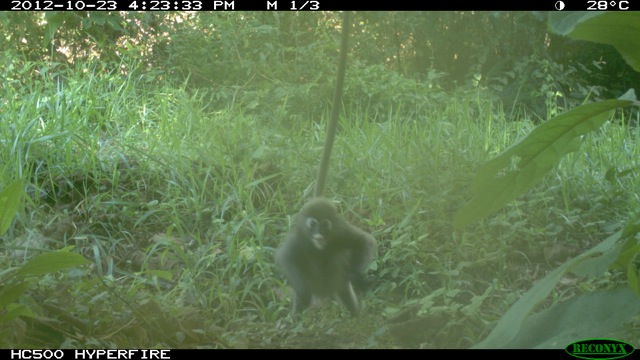
This playful dusky leaf langur (Trachypithecus obscurus), which was caught on a camera trap in the Kenyir Wildlife Corridor last week, was all smiles probably because it knew of some good news coming our way. WHAT IS IT??

The first piece of good news is that the Terengganu state government has decided to freeze development along the Kuala Berang highway bisecting the proposed Kenyir Wildlife Corridor, pending recommendations from environmental consultants working for the federal government. These recommendations are to be submitted by the end of the year.

This decision was reached after we shared our research findings in Kenyir with Dato’ Toh Chin Yaw, Terengganu Chairman of Industry, Trade and Environment Committee, Terengganu State Government. Many thanks to Dato’ Toh for sharing the pictures and videos of Kenyir’s biodiversity with other government officials. Yesterday, this piece of great news was covered by a local news portal, fz.com.

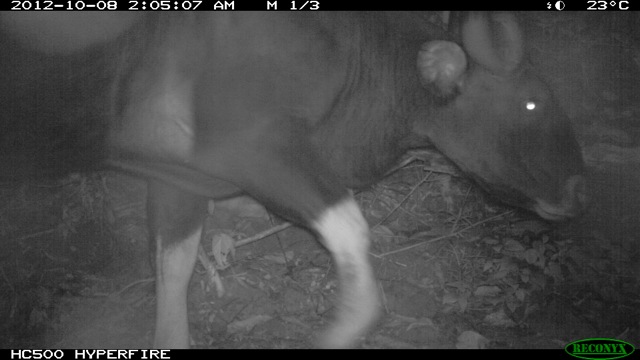
The second piece of good news is that we finally got a  camera-trap picture of the elusive seladang or gaur (Bos gaurus) after 2 years of fieldwork in the Kenyir Wildlife Corridor! We only recorded a single individual, which was detected by two separate cameras.

Although we still have a lot to do to secure protection for the Kenyir Wildlife Corridor, we are working closely with the state government to implement our recommendations. For now, we would like to extend our deepest gratitude to the wonderful people who have supported the Kenyir Wildlife Corridor project. Special thanks also go to Anuar McAfee for helping and working with us on this (Anuar also helped us get the flying foxes protected). Stay tuned for more updates!

* Update 8 November 2012: More extensive coverage, from the very excellent Mongabay: click here!